Ladakh on a Budget: How to Plan a Trip Under ₹25,000
Ladakh on a Budget: How to Plan a Trip Under ₹25,000
1. Introduction: The High-Altitude Budget Myth
Standing at the rooftop of The Hosteller Leh in 2026, looking out at the jagged silhouettes of the Zabarwan range, I checked my bank balance. Six days ago, I had aterrizado in Leh with exactly ₹25,000 in my "Travel" pot (excluding my round-trip flight). Most people told me it was impossible. "Ladakh is expensive," they said. "The fuel prices in 2026 have pushed taxi rates through the roof."
But as I sipped my fifth cup of butter tea, I realized that Ladakh is only as expensive as your ego. If you need a private SUV for just two people, luxury glamping tents with heated floors, and a personal chef at Pangong Lake, then yes, you’ll spend a fortune. But if you’re willing to haggle at the taxi stand, share your stories (and your ride) with strangers, and sleep in the humble, sun-drenched rooms of local homestays, ₹25,000 is more than enough for a soul-stirring adventure.
This is my 2026 firsthand account of how I conquered the "Land of High Passes" on a shoestring budget, without sacrificing the magic that makes this place the capital of the Himalayan adventure.
---
2. The Flight vs. Road: The Economic Entry
The first hurdle is getting there. In 2026, the "4-Month Rule" is your best friend. I booked my Delhi-Leh flight in February for a June trip, and it cost me only ₹8,500 round-trip. If you wait until May, those same tickets can hit ₹25,000—there goes your entire budget before you even land.
The Road-Trip Alternative: If you have more time than money, the Manali-Leh HRTC bus (the "Bimla" or "Himani" service) is the ultimate budget move. In 2026, it costs around ₹3,000 for a two-day journey from Manali to Leh, including an overnight stay at Keylong or Sarchu. It’s brutal, it’s dusty, and it will test every bone in your body, but it’s the most legendary way to enter the valley.
Arrival at Kushok Bakula Rimpochee Airport
Stepping off the plane into the thin, cold air of Leh (11,500ft) is a shock to the system. In 2026, the newly expanded solar-powered terminal at Leh Airport is efficient, but the "Altitude Policy" is strict. There were signs everywhere: REST FOR 24 HOURS. DO NOT TOUR.
I ignored the expensive airport taxis (which were charging ₹800 - ₹1,200 for a 4km drop) and walked 500 meters outside the main gate to the main road. I caught a local shared E-Rickshaw for ₹50 that dropped me right at the Main Market. From there, it was a 10-minute walk to my hostel in the Upper Tukcha area.
---
3. The Mandatory Rest: A Budget Necessity
Most travelers see the first day as a "wasted" day. I see it as an economic necessity. Altitude sickness is the quickest way to blow your budget. A hospital visit in Leh or an emergency oxygen cylinder can cost you thousands.
Resting at the Hostel
I checked into The Hosteller Leh. In 2026, a dorm bed here costs around ₹900 - ₹1,200 per night. The common room was filled with backpackers from all over the world, all looking for the same thing: a group to split taxi costs.
I spent the first day drinking liters of water and snacking on Magnesium-rich apricots (the local secret for altitude). My total spend for Day 1:
---
4. Day 2: The Walking Tour – Leh Local
On Day 2, I felt better. The headache was gone, replaced by a restless energy. Instead of hiring a taxi for a "Local Sightseeing" tour (which costs ₹2,500 - ₹3,500), I decided to walk.
Shanti Stupa: The White Dome of Peace
The climb up the stairs to Shanti Stupa is the ultimate test of your lungs. I took it slow, stopping every 10 steps to breathe and look at the valley below. The Stupa, built by Japanese Buddhists in 1991, is a white beacon. I spent two hours at the top, just watching the sunlight play on the Indus river valley.
Leh Palace & Namgyal Tsemo
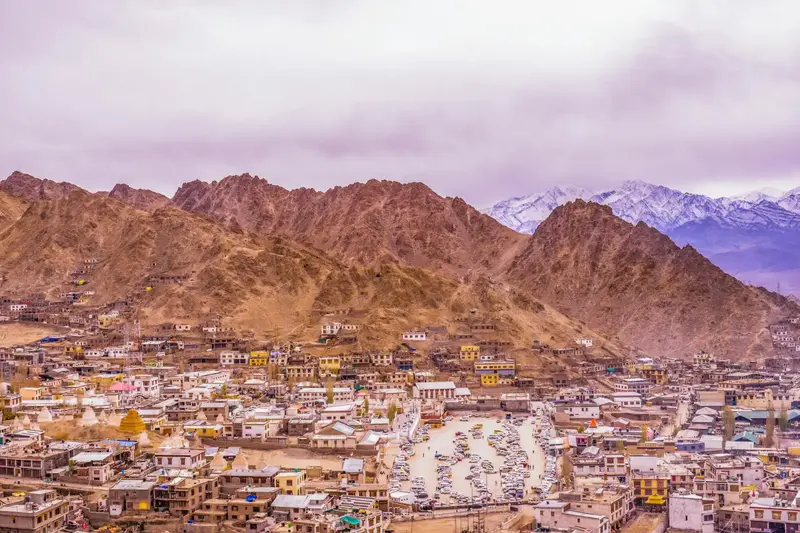
From Shanti Stupa, I hiked down and across to the Leh Palace. Built in the 17th century by King Sengge Namgyal, it’s a nine-story masterpiece of Tibetan architecture. In 2026, the entry fee is ₹25 (for Indians). The views from the upper balconies are spectacular.
I then climbed further up to the Namgyal Tsemo Monastery, which sits at the very top of the Leh crag. The red temple and the thousand fluttering prayer flags are the iconic image of Ladakh. Standing there, with the wind whipping my face and the entire city at my feet, I realized I hadn't spent a single rupee on transport all day.
The Food Move: I ended the day at The Tibetan Kitchen. While it's popular, you can eat on a budget if you stick to the Mok-moks (Momos) and Skyu (a traditional Ladakhi pasta-like dish). A filling meal for one person is around ₹500.
Total Spend for Day 2:
---
5. Day 3: The Taxi Stand Gambit – Nubra Valley
This is where the real budget management begins. Exploring the Nubra Valley and Pangong Lake requires transport.
Finding the Group
At 7:00 PM on Day 2, I headed to the Leh Taxi Union Stand. There’s a massive blackboard there where travelers post "Ride Sharing" notices. I found a note: *"2 people looking for 2 more for Nubra-Pangong 3-day circuit. Leaving 7 AM tomorrow."*
I messaged the number. By 9:00 PM, I was part of a 4-person group. We decided to hire a Maruti Suzuki Gypsy—the workhorse of the mountains. In 2026, the standard taxi union rate for the 3-day Nubra-Pangong circuit is approximately ₹18,000 - ₹22,000 for the vehicle. Splitting it four ways meant each of us would pay around ₹5,000 for three days of transport.
Crossing Khardung La
The drive to Nubra Valley takes you over Khardung La, which for a long time was considered the highest motorable road in the world (17,582ft). In 2026, the road is beautifully paved, but the traffic can be heavy.
As our Gypsy climbed the switchbacks, the leopard-colored mountains of Leh disappeared, replaced by the white-capped peaks of the Karakoram range. We spent exactly 15 minutes at the pass—any longer and the altitude headache starts to creep back—and then descended into the sand dunes of Hunder.
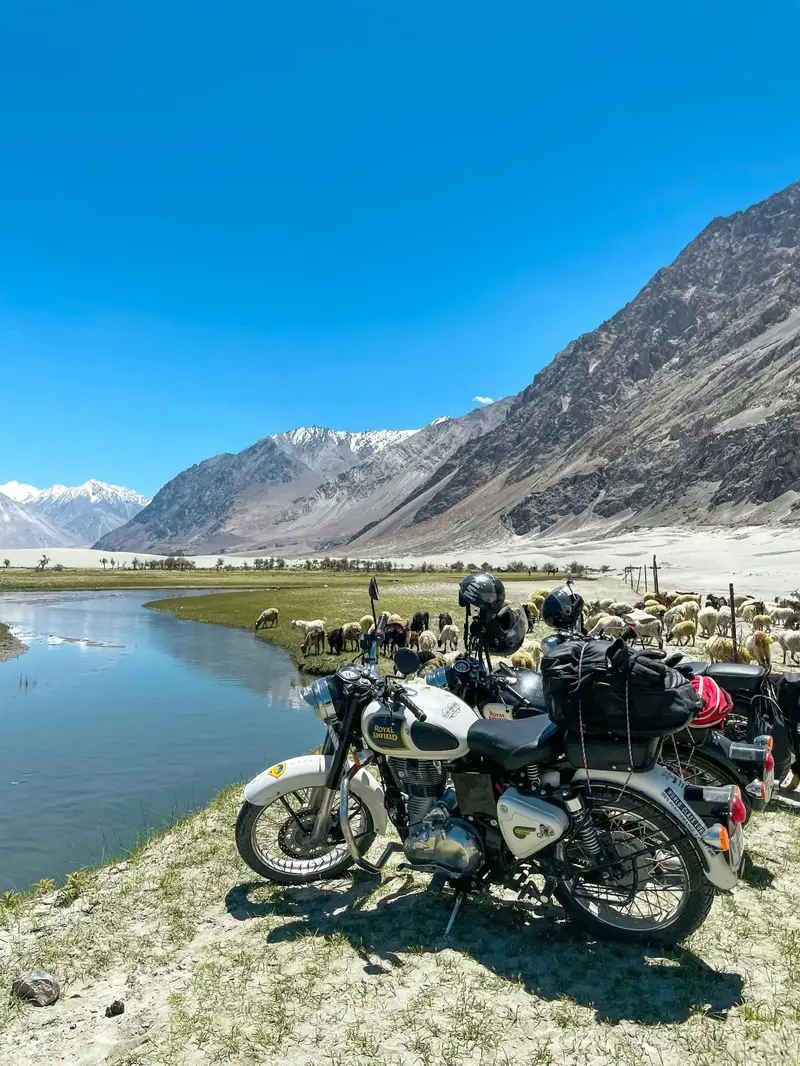
The Budget Stay in Hunder: Instead of the luxury camps, we found a local homestay in Hunder village for ₹1,200 per person, including breakfast and dinner. I spent the evening walking the dunes, watching the double-humped Bactrian camels (survivors of the Silk Road era) trek across the sand against a backdrop of snow-capped mountains.
---
6. Day 4: The Shyok Shortcut – Hunder to Pangong Lake
Traveling from the white sands of Hunder to the sapphire waters of Pangong Lake is the highlight of most Ladakh itineraries. In 2026, the Shyok River Route is the go-to path for budget travelers. It saves you an entire day and several thousand rupees in taxi fares by avoiding the long loop back to Leh.
Arrival at Pangong: The Blue Fever
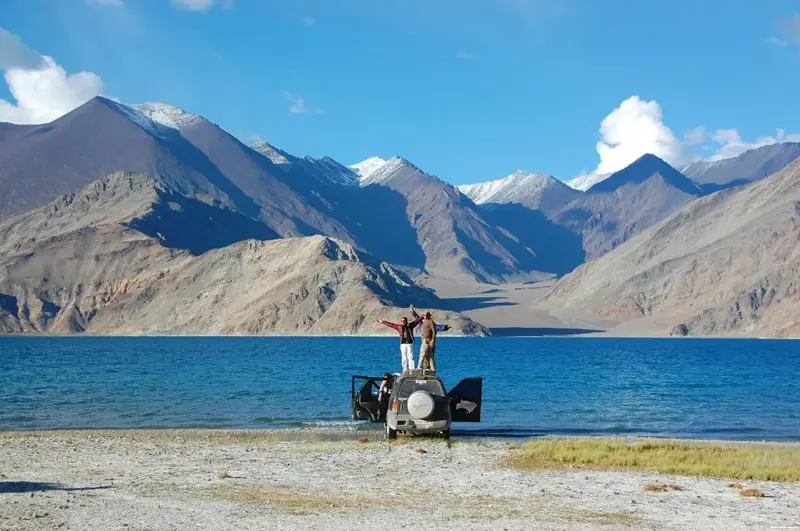
As we rounded the last corner before Tangste, the first sliver of blue appeared. Pangong Tso is not just a lake; it’s an optical illusion. At 14,270ft, the water changes color from turquoise to indigo to emerald, depending on the angle of the sun.
The Budget Stay at Spangmik: Many travelers stay in the luxury glamping sites at Lukung, which can cost ₹5,000 - ₹8,000 per night. We pushed further into Spangmik village (closer to the China border) and found a local homestay for ₹1,000 per night, including a dinner of hot *Thukpa* and local bread. The rooms were basic, the toilets were "Ladakhi" (dry compost), and the temperature dropped to -5°C at night. But as I sat on the shore of the lake at 10:00 PM, looking at a Milky Way so bright it cast shadows on the ground, I felt like the luckiest person on earth.
---
7. Day 5: The High Pass Home – Pangong to Leh
Our fifth day was the long haul back to Leh over Chang La (17,585ft). This is the "Hard" pass. It’s steeper than Khardung La, and the weather is far more unpredictable.
Arrival back in Leh
We reached Leh by 4:00 PM. I checked back into the same hostel for my final night. I spent my last evening in the market, buying a few small gifts—mostly local sea-buckthorn juice and a small prayer wheel.
---
8. 2026 Budget Spreadsheet: The ₹25,000 Challenge
Here is the exact breakdown of how I spent my ₹25,000 over 6 days in Ladakh.
| Category | Cost (INR) | Notes |
| :--- | :--- | :--- |
| Flights (Delhi-Leh-Delhi) | ₹8,500 | Booked 4 months in advance. |
| Accommodation (5 Nights) | ₹5,200 | Hostels in Leh, Homestays in Hunder/Spangmik. |
| Transport (Vehicle Share) | ₹5,000 | 3-day Nubra-Pangong-Leh loop (Split 4 ways). |
| Inner Line Permit (ILP) | ₹800 | Online through LAHDC portal (includes env fee). |
| Food & Water | ₹4,200 | Average ₹700 per day (Local dhabas/homestay meals). |
| Entry Fees & Extras | ₹500 | Leh Palace, Thiksey, small gifts. |
| Emergency Buffer | ₹800 | Unforeseen local transport/snacks. |
| GRAND TOTAL | ₹25,000 | ($300 USD approx.) |
---
9. The 2026 Ladakh Survival Toolkit
1. The Acclimatization Protocol
The best medicine is still Time. Don't rush. Drink liters of water and snack on apricots.
2. Connectivity Realities
3. Packing for 2026
---
10. Massive FAQ: Your 2026 Budget Questions Answered
Q: Can I do this trip solo on this budget?
A: Yes, IF you are willing to spend time at the taxi stand or in hostels to find ride-shares. If you go solo in a private taxi, you will spend ₹60,000+.
Q: Is hitchhiking safe in Ladakh?
A: Generally, yes. The local army trucks and supply vehicles frequently pick up travelers. However, it's not reliable for a tight 6-day schedule. Use it as a backup, not a primary plan.
Q: Best month for budget travel?
A: September. The peak summer crowds (and prices) start to dip, but the roads are still open.
Q: How do I get an ILP in 2026?
A: Use the [LAHDC Leh Permit Portal](https://lahdclehpermit.in). You can pay online and download the permit. Print at least 5-6 copies.
---
*Ready to conquer the high passes? Check out our Ladakh: Land of High Passes Budget Expedition and start your adventure today!*